
A conversation with Dominique Jost, Head of Product at Doist
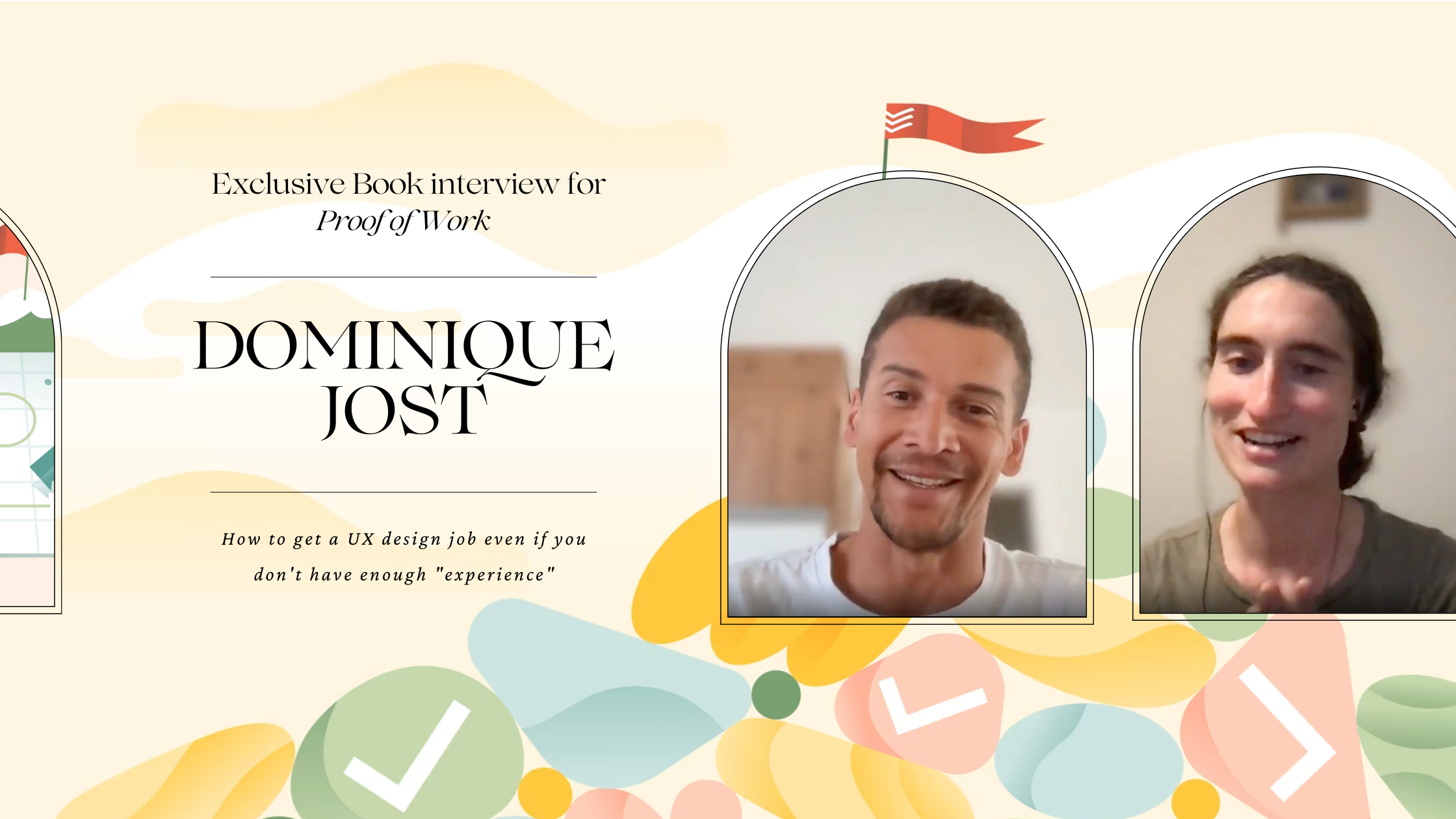
Background image credit to Todoist
As I continue writing my book about building design experience, I’ve been talking with leaders I deeply respect about what actually helps designers and product people grow early in their careers, especially when the traditional paths feel broken or unclear.
Dominique Jost is the Head of Product at Doist (the parent company of the product Todoist I use every day and have written extensively about in my other blogs!), brought a perspective we don’t hear often enough: progress rarely comes from waiting for structure. It comes from learning ahead of your role, taking responsibility before you feel ready, and being willing to operate inside imperfect systems.
Our conversation wasn’t about career ladders or productivity hacks; it was about ownership, pragmatism, and learning how to work with reality rather than wishing it were different.
The habits that compound early
When I asked Dominique what habits he would want new designers or product managers to build early, his answer focused on ownership.
Learning, in his view, is not something you outsource to your manager or your role. It is an investment you make in your future self. Waiting to be told what to learn is already falling behind.
Alongside learning is a willingness to take on responsibility before you feel fully ready. Dominique shared that he would always prefer someone who says yes with transparency about where they need support over someone who opts out because they do not yet feel qualified.
That willingness matters even more when things get hard. Challenges are expected. Silence is not. Communicating early, sharing what you have tried, and naming where you are stuck builds far more trust than disappearing and resurfacing days later.
Pragmatism over theory
A major theme in our conversation was pragmatism, especially for people early in their careers.
Dominique talked about how easy it is to cling to theory when you are fresh out of school or a bootcamp. You know how things should work, and it can feel deeply frustrating when reality does not match the model.
As he put it, theory represents best-case scenarios. Real work never does.
What actually moves careers forward is showing that you can apply what you know within constraints. The ability to work with imperfect inputs, partial information, and messy systems is often more valuable than knowing the “right” process.
What stands out in junior designers right now
Dominique believes junior designers have a real advantage in the current moment.
With technology and AI evolving so quickly, many long-held assumptions no longer apply. Ideas that may have been dismissed years ago deserve a second look, simply because the tools and context have changed.
What stands out most to him, though, is when designers show curiosity beyond the interface. Designers who take time to understand how the business works consistently create stronger, more effective work.
When you understand how a product makes money, how it is positioned, and what constraints exist, your designs become easier to defend and more likely to ship.
How to actually learn the business
One of Dominique’s most concrete pieces of advice was also one of the simplest: “talk to your finance team.”
Instead of guessing how the business works or relying only on secondhand explanations, he encourages designers and product people to build relationships with finance partners and ask real questions. How does the company make money? What costs the most? What worries them?
Designers already have the skills to do this well. We are trained to listen, ask follow-up questions, and understand complex systems. We just do not always think to apply those skills internally.
This knowledge does more than inform better design decisions; it changes how you talk about your work. Two people can present the same design, but the one who grounds it in business context is far more likely to get buy-in.
Productivity without perfection
Despite working at a company known for productivity tools, Dominique was candid about his own struggles with productivity.
His takeaway was not about finding the perfect system, but about understanding yourself. Energy levels, focus patterns, and working styles vary wildly from person to person. Forcing yourself into a popular method that does not fit often creates more friction than progress.
Productivity, like careers, is personal. What matters is clarity about the end goal and an honest assessment of what helps you move toward it.
Designing a career by noticing patterns
Dominique shared that he never intentionally designed his career. Instead, he followed curiosity and paid attention to what energized him over time.
One distinction he finds especially useful is between creators and editors. Some people thrive with a blank canvas. Others do their best work when something already exists and needs refinement. Most people lean strongly one way.
Noticing patterns like this helps you make better decisions about roles, projects, and opportunities.
His advice for early-career designers and product managers was straightforward: say yes often, especially when you are young, but stay aware of what drains you versus what pulls you forward.
Curiosity, paired with self-awareness, tends to take you further than any rigid plan.
In conclusion
What I appreciated most about my conversation with Dominique was how easily-actionable it felt. No rigid frameworks. No promises of a perfect system. Just honest reflections from someone who has spent decades navigating uncertainty, growth, and change.
His advice reinforces one of the core ideas behind the book I’m working on, that you don’t build a career by waiting for permission or ideal conditions. You build it by learning continuously, taking responsibility early, understanding the systems around you, and paying attention to what actually energizes you.
Careers are shaped less by titles and more by patterns. The faster you start noticing those patterns in how you learn, work, and contribute, the more agency you gain over where your path leads.