
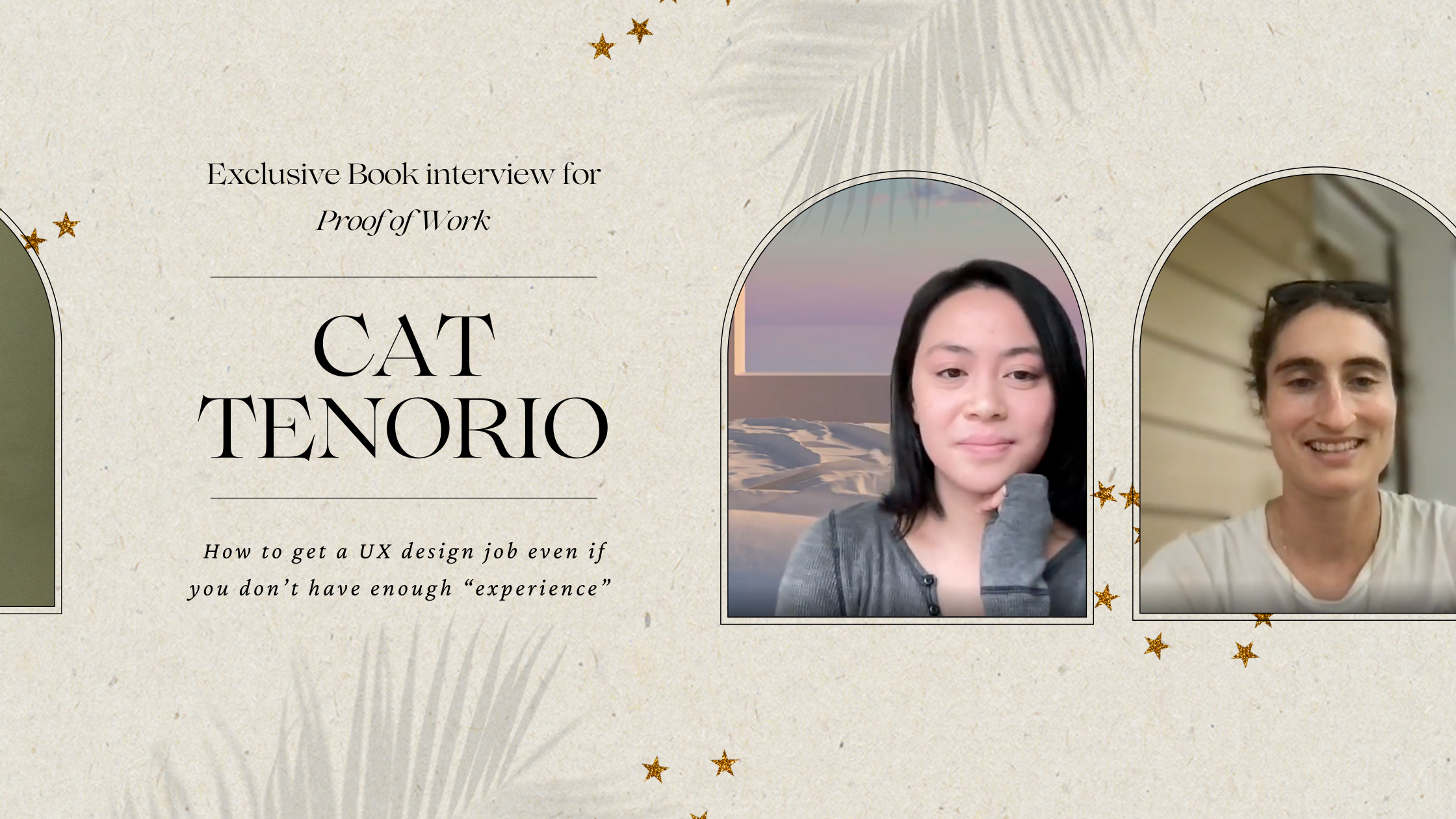
Addie Johnson and Cat Tenorio sit down to talk about design careers
Cat Tenorio thought she'd be a graphic designer until one interaction design class changed everything. The mix of research, problem solving, and digital design clicked in a way that felt obvious to her. From there, she started pulling UX into every project she could, even though her design program didn't offer much in that direction.
I've been interviewing designers I admire as part of writing this book, and Cat's story is one that newer designers need to hear. There's no perfect origin story, no single "right" entry point, and no straight line from student to professional. Cat's path shows what's actually possible when you shape a career from curiosity, small steps, and a willingness to learn as you go.
She built her own path when the program didn't
Cat didn't wait for her school to offer what she needed. She added outside programs like Co.Lab, turned her graphic design internship into a digital role by jumping on a website project, and slowly stitched together enough experience to make the leap. None of it was handed to her. She followed curiosity and looked for ways to grow wherever she could find them.
Before design, Cat worked in hospitality and customer service. She thought this experience was irrelevant until she realized how much it taught her about understanding people, handling feedback, and staying calm under pressure. All of that showed up in how she approached design problems and communicated with teams.
Her first role came from being visible and ready
Chris from Hatch found her on LinkedIn. Cat wasn't posting constantly or building a personal brand, but she made sure her profile was up to date and her portfolio showed range: student projects, Co.Lab work, that website from her internship. She kept her case studies honest about what she contributed and what she was still learning. She wasn't trying to look like an expert. She showed she could learn fast and figure things out.
The key: she made sure anyone who landed on her profile could quickly understand what kind of work she did and how she thought about problems.
How to build confidence without a "real" design job yet
Cat was honest about how hard it is to feel legitimate when you don't have a title or a paycheck yet. What helped her was staying curious, doing small team projects through programs like Co.Lab, connecting with other designers on LinkedIn and Twitter, asking for feedback even when it felt vulnerable, and reminding herself that her past experience still counted for something.
She also talked about the mindset shift that mattered: you don't need permission to call yourself a designer. If you're doing the work, learning, and improving, you're already in it.
Why your portfolio needs messiness, not just polish
Instead of following the same case study template everyone else uses, Cat shaped her projects around what actually happened. The twists, the moments of confusion, the constraints she worked within, the decisions she made and why. Showing how you think (including the imperfect parts) makes your work stand out more than a perfectly polished deck that looks like everyone else's.
Recruiters and hiring managers see hundreds of portfolios. The ones that feel real, that show a person thinking through problems, are the ones that stick.
Startup life made her fast and scrappy
Her first job at Hatch taught her how to move quickly, iterate constantly, and learn new tools without overthinking it. There was no time for perfect. She had to ship, get feedback, and improve in real time. Later, working in a more structured environment gave her a different kind of growth: more process, more collaboration across teams, more strategy. Both experiences mattered. Both shaped her into the designer she is now.
What she'd tell designers just starting out
Speak up, even when you feel new. Ask questions. Share your point of view. Your beginner's perspective is valuable. It can reveal assumptions and blind spots that people who've been in the field for years have stopped noticing. In Cat's first role, she'd ask "why are we doing it this way?" not to challenge anyone, but because she genuinely wanted to understand. Those questions often led to better solutions.
Choose roles that align with your values and the kind of work you actually want to do. Cat talked about how important this became as she gained more experience. Early on, she took what she could get. But as she grew, she started asking herself what kind of problems she wanted to solve and what kind of environment would help her do her best work. It made the hard parts easier and gave her a clearer direction for the long term. When the work matters to you, the learning feels less like a grind and more like momentum.