
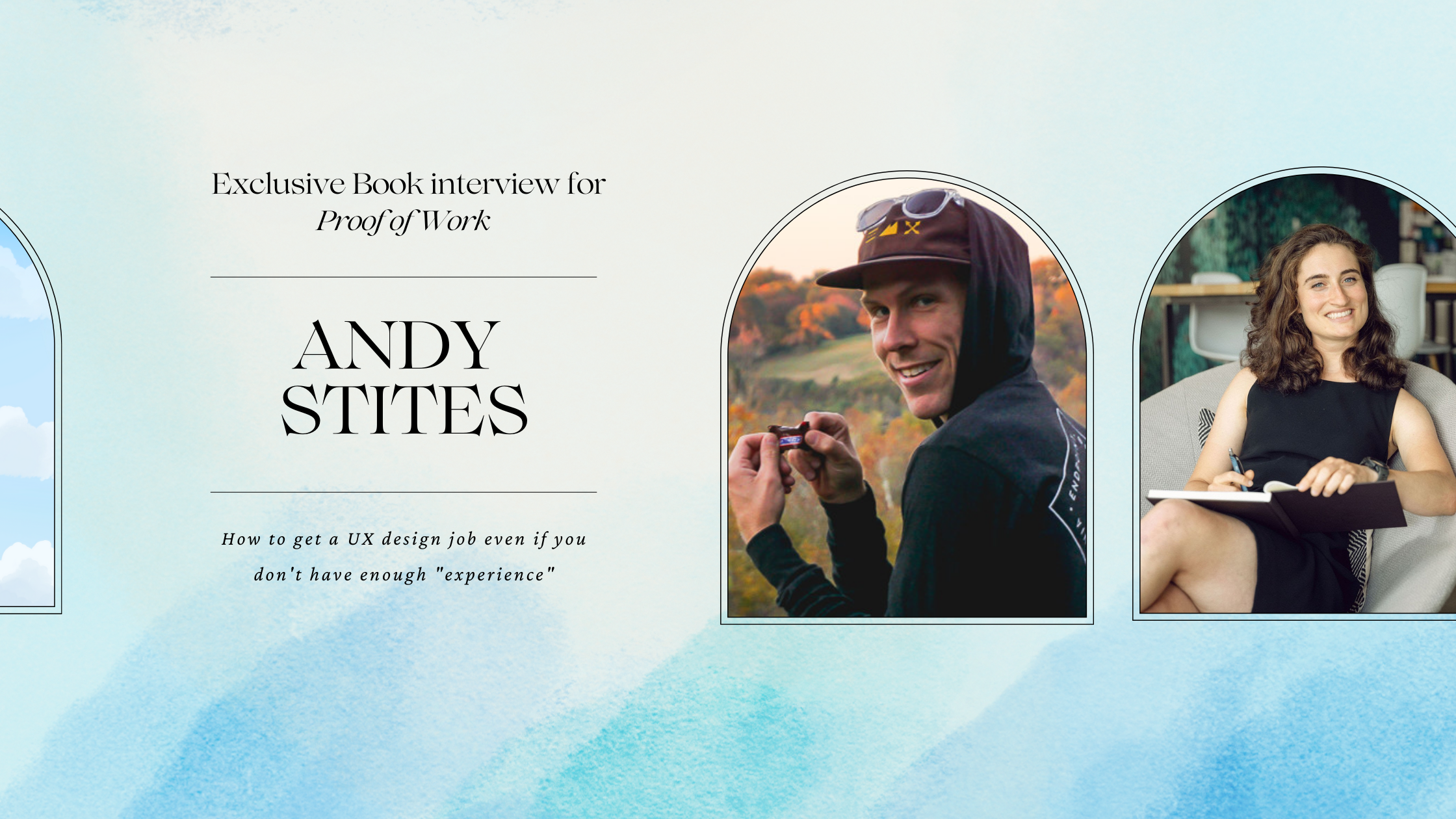
A conversation with Andy Stites on curiosity, craft, and building experience before the job exists
“Creativity is free, and no one has to give you permission to design.”
This idea came up again and again in my conversation with Andy Stites, Principal Experience Designer at CarMax. Andy has spent his career bouncing between design, technology, education, and leadership. He’s also been doing that even before there was a clear name for the work he was doing. Listening to him talk, it became clear that his path into UX wasn’t driven by a shiny trend; it started much earlier, with a simple impulse: making things on computers because they were there.
This conversation is part of a larger research project I’m working on for my book, focused on how designers build real experience when junior roles and traditional entry points are disappearing. Andy’s story is especially powerful because it reminds us that many of the skills we now formalize as “UX” were once just curiosity, observation, and care for how things work.
“I just liked solving problems with digital tools”
Andy’s introduction to UX started in middle school.
He talked about building websites for fun. Customizing LiveJournal layouts. Making photo galleries. Writing scripts for early chat platforms so conversations flowed better while gaming. Journalism and yearbook design became his first “real” responsibilities, where layout, hierarchy, and readability mattered because someone else would be using what he made .
“It wasn’t called UX then,” he said, “but it was experience.”
Andy sees user experience everywhere: in retail spaces, in physical stores, in books, in digital tools, in games. For him, UX isn’t limited to software, it’s about understanding how someone encounters something and whether it makes sense to them.
His first professional experience came when he started freelancing in college for small businesses, especially a RVA local bike shop. He walked in, noticed their website didn’t match the feeling of the store, and offered to fix it purely from curiosity and initiative.
“I literally went to them and said, Can I do this in trade or just for fun?”
His attitude to simply build and learn became a recurring pattern in our interview.
Learning UX before there were rules
Andy entered the industry during a moment when digital design was still forming its conventions. He worked at a brand agency with clients like Microsoft and Best Buy while smartphones, apps, and cloud tools were just becoming mainstream.
“There weren’t design systems. There weren’t rules yet. You were watching conventions happen in real time.”
One of his first major UX projects was designing a digital learning platform from scratch to replicate a 15 week graduate curriculum with no existing product to iterate on. The work required understanding structure, pacing, motivation, and learning outcomes.
This project shaped how Andy thinks about the modern day product design landscape. Today’s designers inherit pre-existing systems, patterns, and tools that have been proven to work. It’s cool, but comes with its own set of challenges.
Now the question isn’t how do we invent everything from nothing?
It’s how do we work thoughtfully within proven systems while still exploring what’s next?
What juniors actually need to demonstrate
When we talked about the lack of junior roles today, Andy was candid. He believes there is a baseline level of understanding required to enter the field.
“If you want to work in UX, you should already be making things in a digital space.”
That doesn’t mean shipping perfect products or crazy-beautiful UI screens, but more about showing curiosity and comprehension. Knowing the underlying psychology of a checkout page. Understanding what a design system is, even if you’ve never built one at scale. Being able to say, “Here’s what I explored, here’s what I learned.”
Andy emphasized that portfolios don’t need to be perfect! But they do need to show thinking and a willingness to learn.
“You’re not showing how much you know. You’re showing how far you’re willing to grow.”
“Nobody asked me to do it. I just did it.”
One of my favorite stories Andy shared was about a speculative redesign he did for Strava (one of our favorite apps, as we are both cyclists). He asked a friend a simple question while out on a run: What’s one thing you’d change about Strava?
Andy sketched ideas, designed screens, posted one image online, and moved on. Months later, that single screen led to a recruiting call from Wahoo asking him if he wanted a job.
“No one asked me to [design] it. I just wanted to.”
This is central to Andy’s philosophy: you can’t wait for permission to practice design. You don’t need access to expensive tools or formal user testing platforms. You talk to people. You observe. You’ve got to ask questions. You make something, see what breaks or doesn’t work, and try again.
What Andy looks for in interns
Andy runs the internship hiring process at Carmax, and had a lot of great insight.
What impressed him were candidates who pushed ideas further than expected, who weren’t afraid to break their brief. Folks who explored wildly, even if the final result wasn’t perfectly usable.
“The candidate we picked went so far that the client didn’t even accept the work. And that’s why we chose them.”
What mattered was initiative, range, and resilience. The ability to work without constant permission, and comfort with being wrong. High output without preciousness. If you can show where you failed and what you learned from a test, that was what really stuck out.
“If you’re afraid to fail, it’s going to be hard to grow.”
Protecting curiosity as your career grows
When I asked Andy what he’d tell his younger self, his answer surprised me.
He’d remind himself to stay playful!
“I used to just make stuff because there was no pressure. I miss that.”
He said as designers become more senior, it’s easy to lose that energy. Everything becomes accountable, almost performative. Things are more and more tied to business outcomes. Andy said it’s essential to protect your personal creativity alongside professional responsibility.
“You shouldn’t lose your passion for human problem-solving just because you’re solving someone else’s problem all day.”
That balance, he said, is what keeps the work meaningful.
Why it all matters
Andy’s story reinforces a core theme I keep seeing across these interviews: the designers who grow the most aren’t waiting for perfect conditions; they’re making things and asking questions, and especially staying curious even when there’s no more novelty.
And as Andy put it best: creativity is free, don’t wait for someone to ask you to make something. Just go out there and start building!