
How Will Kuhlke from Apple Built a Product Design Career by Following the Work
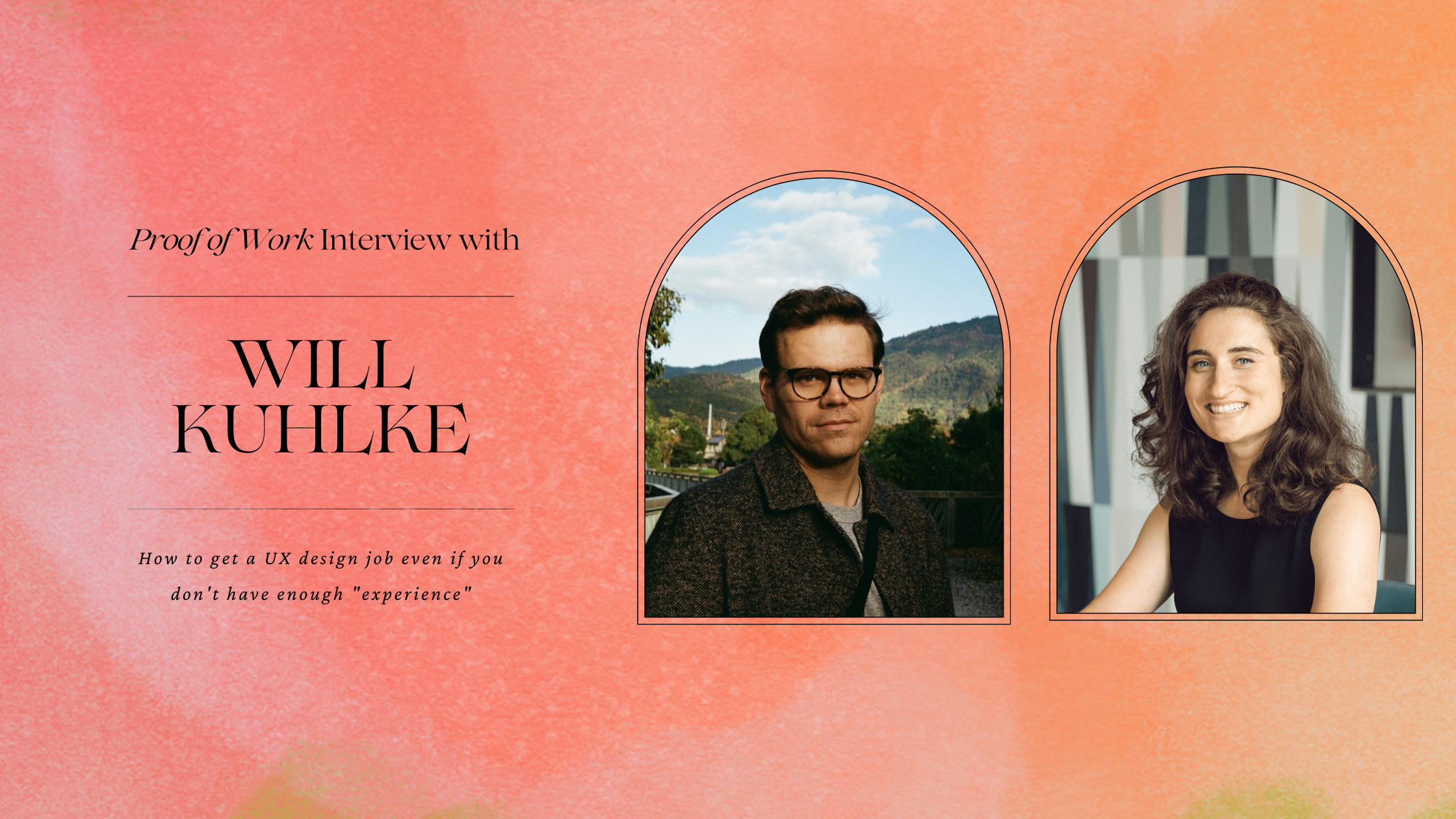
A conversation with Will Kuhlke, Senior Product Designer at Apple
Will Kuhlke did not enter design through apps, interfaces, or product teams, nor did he major in design.
He did so by making T-shirts for his band in Kansas City.
He taught himself Illustrator, learned how to screen print, bought equipment, and sold merch at shows. Even though, as he said while laughing, “the shirts were not great, and the music was worse,” he loved the act of making something that other people used, and that feeling stuck.
Today, Will is a Senior Product Designer at Apple, working on internal and partner-facing tools that support the App Store ecosystem. I wanted to ask Will about his background in design, and specifically what he would recommend to students and junior designers about how to get a UX role in a world where it’s so hard to get a foot in the door for junior design listings that a require 3-5 years of experience.
Will’s first design role post-school
After returning to school for art and printmaking, Will took a job at a physical product design company. The work was not digital; he designed packaging and instruction manuals for outdoor gear: tents, lanterns, sleeping bags. The similarities between this work and UX work quickly became apparent to him.
“UX is really just instruction,” Will said. “Sometimes it’s explicit, sometimes it’s implicit.”
Designing instruction manuals forced him to think about clarity, sequencing, and real-world constraints. People had to understand the product without a walkthrough or explanation. If they failed, the design failed.
He became further interested in taking those skills to a new role in product design.
On Imposter Syndrome
One of the most striking parts of our conversation was how plainly Will talked about imposter syndrome.
“The biggest barrier back then is the same barrier now,” he said. “I still have it, and I’m a senior product designer at a big tech company.”
Will described validation testing as both a professional practice and a personal anchor to help him work through impostor syndrome. Early in his career, that meant getting feedback from stakeholders, and today, it means testing with users whenever possible.
“The reality is that you don’t actually know what’s going on,” he said. “That’s the right position to be in.”
Instead of trying to feel certain, he learned to rely on evidence. Feedback did not eliminate doubt, but it made decisions real. Over time, he began to realize that being able to point to specific data points about why he made decisions mattered more than your own personal confidence ever could.
Strategizing Your Career Roadmap
Before going to grad school, Will already knew the direction he wanted his career to take, and and immediately began thinking about what kind of roles he’d need to build the blocks of his career.
“I put myself in positions that would look good on an application,” he said.
That meant choosing packaging design over pure graphic design and reframing instruction manuals as user flows. It meant looking for work that involved feedback, constraints, and real use cases.
None of it was flashy, but it sure did compound.
This same approach showed up later in a side project he described. What began as a class assignment turned into a deeper exploration of how clinically proven therapeutic interventions could support people with Huntington’s disease and their caregivers.
“We already had access to stakeholders,” he said. “So we went back, tested it, and kept going.”
That project ended up in multiple portfolios, and he was able to give to a population using his skillset.
Tools < the Why and the How
When I asked what advice he would give to someone trying to break into product design, Will did not mention software.
“I wouldn’t worry too much about learning Figma,” he said. “I’d worry more about understanding why something works the way it does.”
He said he sees this gap clearly when reviewing junior portfolios; many are visually competent, but few show meaningful validation or decision-making grounded in user feedback.
“You can use any tool to communicate a good idea,” he said. “Your approach to problem solving is what makes you a product designer.”
Will also said that his understanding of design changed most dramatically as his career progressed. Earlier on, legacy software UI design felt bad and baffling.
“I used to think, why would anyone design this?” he said. “Now I think about the technical debt they’re dealing with.”
In his perspective, senior-level design is about understanding the system that produced the designs you see today. If the question is how to get more people to click a link, the answer may not be a button color or rounded corner radius. The real work of why starts earlier. Why is a customer on this page? What brought them here? What happens after they click?
Design stops being about screens, and more about cause, effect, and tradeoffs of our design decisions.
Visual thinking as a force multiplier
One place where Will consistently invests effort is communication. He relies heavily on visual models to explain systems, flows, and constraints.
“I build models for almost every presentation,” he said. Not everyone in a room shares the same mental framework, so he has found that diagrams create shared understanding faster than text ever could. They make complexity visible and help his teams align.
His models often focus on:
Data movement
System interactions
Inputs and outputs
Constraints and dependencies
Then, he weaves this information through his presentations as a story, yet still showing these artifacts as visual diagrams of what’s actually going on. His approach was shaped by years of working closely with engineers, where modeling flows, dependencies, and constraints mattered more than a beautiful interface, and it’s just a really cool way to show what you’re thinking.
How might you use a diagram to help explain something you’re working on?
Looking back
I asked Will, if he could change his own career path, what would he change? He said, “I would start sooner. And I would say yes to more projects when I had the chance.”
Especially in grad school, he said he left opportunities on the table. He said maybe he could have gotten less sleep to get more leverage. I think we all wish we could have done more, but it really is a balance. I think taking a winding path matters too (and we’ve heard it throughout this interview series). Printmaking, physical products, systems thinking, and even his band design work all have shaped how he now works today.
Takeaways
Will’s story reinforces a pattern I keep seeing across these conversations. The designers who grow the most are not waiting for the right title, the perfect role, or the cleanest problem. They are making things, testing ideas, and asking better questions over time; they stay curious even when the work stops feeling new.
For Will, that curiosity shows up in how he thinks about systems, how he models complexity, and how he uses diagrams to make invisible constraints visible. The work is not about polishing screens. It is about understanding why something exists, how it behaves, and what happens when you change it.
The conditions are rarely perfect, and that’s okay. The important thing to note is that the opportunity is always there. Don’t wait for someone to ask you to make something; go out there and start building.